
Liquor Bridge Launches: IOTA-Sui Cross-Chain Bridge Now Live on Testnet
LiquidLink announces Liquor Bridge MVP, a bidirectional bridge connecting IOTA and Sui networks using LayerZero. Learn how it works and what it means for IOTA ecosystem growth.
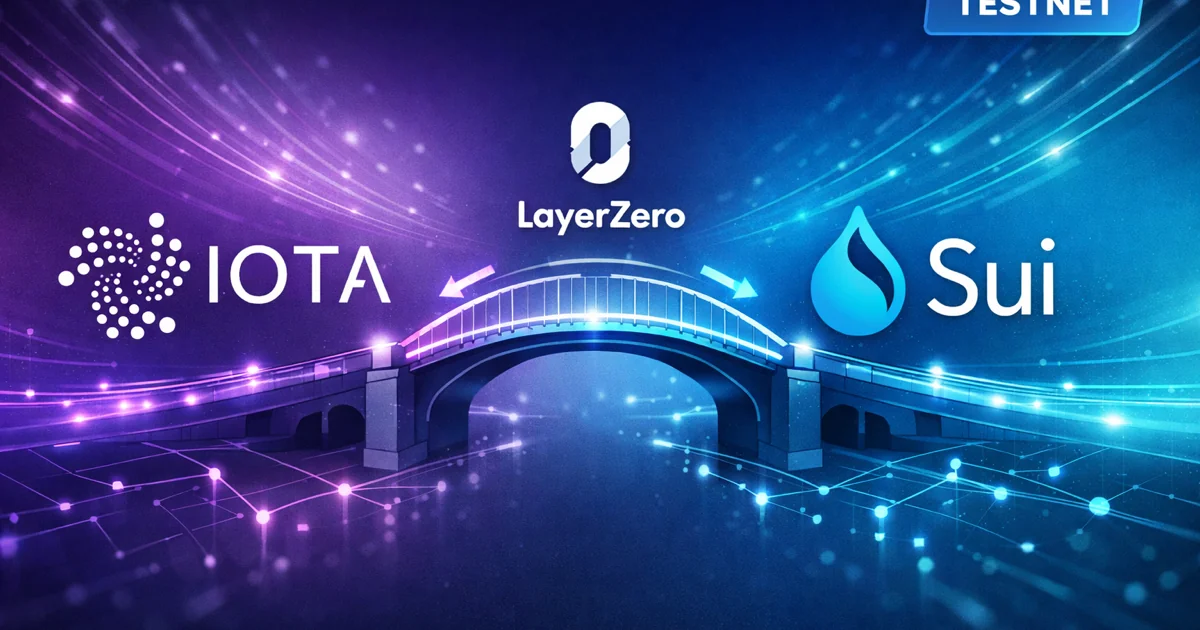
IOTA and Sui Now Connected via LayerZero
LiquidLink has officially launched Liquor Bridge MVP, a bidirectional cross-chain bridge that connects the IOTA and Sui networks using LayerZero Core technology. The announcement, made on January 7, 2026, marks a significant step forward in making IOTA's Move-based ecosystem more interoperable with other blockchain networks.
The bridge is currently live on testnet at bridge.liquidlink.io, allowing developers and early adopters to test token transfers between the two Move-compatible chains before mainnet deployment.
What Is Liquor Bridge?
Liquor Bridge is a minimum viable product (MVP) that establishes bidirectional token channels between IOTA and Sui blockchains. "Bidirectional" means users can transfer supported tokens from IOTA to Sui and from Sui back to IOTA using the same infrastructure.
Currently, the bridge supports TESTOFT (test tokens) on both networks, with mainnet support for real assets expected in future releases.
The Technology Behind It
Liquor Bridge is powered by LayerZero V2, a protocol designed for secure cross-chain messaging and token transfers. Here's how it works at a high level:
- Debit on source chain: When you send tokens from IOTA to Sui, the bridge either locks or burns your IOTA tokens
- Message passing: LayerZero's messaging protocol sends a verified message to the destination chain
- Credit on destination chain: The bridge mints or unlocks equivalent tokens on Sui for your address
This architecture preserves a unified global supply across both chains—meaning 1 TESTOFT on IOTA can become 1 TESTOFT on Sui (and vice versa) without creating duplicate or fragmented token supplies.
Why This Matters for IOTA
Cross-chain bridges are critical infrastructure for any blockchain ecosystem. Here's why Liquor Bridge's arrival is significant for IOTA holders and developers:
1. Expanded Liquidity Routes
Bridges reduce friction when moving assets between ecosystems. Instead of selling IOTA tokens for fiat, then buying Sui tokens (and paying fees twice), users can move value directly between chains. This opens up access to DeFi protocols, DEXs, and staking opportunities on both networks.
2. Move-to-Move Interoperability
Both IOTA and Sui are built on the Move programming language, originally developed by Meta (Facebook). Liquor Bridge represents one of the first production examples of Move-to-Move cross-chain messaging, which could become a template for future interoperability projects across Move-based chains.
3. Multi-Chain Application Design
Developers building on IOTA can now design applications that span both IOTA and Sui. For example:
- A DeFi protocol could use IOTA for high-speed transactions and Sui for complex smart contracts
- NFT projects could mint on one chain and trade on another
- Yield aggregators could route assets to whichever chain offers better APY
4. Ecosystem Growth Signal
The fact that a third-party team (LiquidLink) chose to build cross-chain infrastructure for IOTA signals growing interest in the ecosystem. Infrastructure projects typically appear when there's meaningful developer and user activity worth connecting.
Who Is LiquidLink?
LiquidLink describes itself as a "modular on-chain incentive infrastructure" focused on Move-compatible chains. The platform allows developers to:
- Issue behavior-based points and rewards
- Automate airdrops and loyalty programs
- Aggregate user activity across multiple chains
- Manage DeFi portfolios from a unified interface
LiquidLink currently supports both IOTA and Sui mainnets for its points system and has integrated with DeFi protocols including Bucket Protocol and Strater. The team has also outlined plans for smart contract audits, DAO tooling, and integration with IOTA Name Service (similar to ENS on Ethereum).
As of January 2026, LiquidLink reports 874 linked addresses, 296 IOTA users, and 227 Sui users on its platform.
How Liquor Bridge Works (Technical Overview)
For developers and technically curious users, here's a deeper look at the mechanics:
LayerZero's OFT Standard
Liquor Bridge implements LayerZero's Omnichain Fungible Token (OFT) standard. The OFT pattern works like this:
- Source chain: The contract calls
_debit(), which either burns tokens (if native) or locks them (if using an adapter) - Cross-chain message: LayerZero's Endpoint routes the message through configured Decentralized Verifier Networks (DVNs) and an Executor
- Destination chain: The contract calls
_credit(), which mints new tokens (if native) or unlocks existing ones (if using an adapter)
This ensures that the total supply across all chains remains constant—when 100 tokens are debited on IOTA, exactly 100 tokens are credited on Sui.
Security Assumptions
When using any bridge, you're trusting:
- The bridge smart contracts: Bugs or exploits could result in loss of funds
- LayerZero's messaging protocol: The security of DVNs, Executors, and the Endpoint
- Admin keys and upgradeability: Whether the bridge operators can pause, upgrade, or modify the contracts
For Liquor Bridge specifically:
- LiquidLink's roadmap mentions "Smart contract 100% tested and audited" as a general milestone, but as of January 2026, there is no public audit report specifically for Liquor Bridge
- The bridge is currently in MVP/testnet phase, meaning mainnet security assumptions are not yet finalized
- Users should treat this as experimental infrastructure until a full security audit and mainnet launch are announced
Current Testnet Status
As of January 12, 2026, Liquor Bridge is live on testnet only:
- Supported networks: IOTA testnet ↔ Sui testnet
- Supported tokens: TESTOFT (test tokens)
- Fees: Testnet transactions (no real value at risk)
- Faucet available: Users can claim 10 TESTOFT on both chains directly from the bridge UI
To try the bridge yourself, connect both a Sui testnet wallet and an IOTA testnet wallet at bridge.liquidlink.io.
What Comes Next?
While LiquidLink has not published a detailed roadmap for Liquor Bridge, typical next steps for an MVP cross-chain bridge include:
- Mainnet token support: Adding real assets (likely starting with native IOTA and native SUI, then expanding to stablecoins and other tokens)
- Security audit: Engaging a reputable smart contract auditor (e.g., Trail of Bits, OpenZeppelin, CertiK) to review the bridge contracts and LayerZero integration
- UI/UX improvements: Refining the interface, adding transaction history, and providing better error messages
- Gas optimizations: Reducing fees for cross-chain transfers
- Bug bounty program: Incentivizing security researchers to find vulnerabilities before malicious actors do
If you're planning to use Liquor Bridge once it goes to mainnet, watch for official announcements about:
- Which tokens will be supported
- Final audit reports and findings
- Fee structures and limits
- Admin key policies and decentralization plans
How to Prepare
If you're interested in cross-chain opportunities between IOTA and Sui, here's how to position yourself:
For Stakers
Keep an eye on how bridge liquidity affects IOTA staking dynamics. If large amounts of IOTA move to Sui for DeFi opportunities, it could impact:
- Staking ratio: Less IOTA staked = potentially higher APY for remaining stakers
- Network security: Lower staking participation can affect consensus stability
- Price volatility: Cross-chain arbitrage opportunities can increase trading volume
Use our APY Calculator to model how changing staking ratios might affect your rewards, and monitor your positions with the Staking Tracker.
For Developers
If you're building on IOTA, consider how cross-chain features could enhance your product:
- Could your users benefit from accessing Sui's DeFi ecosystem?
- Would bridging to Sui unlock new liquidity sources?
- Can you design a feature that leverages both chains' strengths?
LayerZero provides open-source SDKs and detailed documentation at docs.layerzero.network for developers interested in building omnichain applications.
For Token Holders
Before using any cross-chain bridge (not just Liquor Bridge), follow this safety checklist:
✅ Verify the bridge URL: Scammers often create fake bridge sites with similar domains
✅ Start with small amounts: Test with a minimal transfer before moving significant value
✅ Understand the risks: Bridges are complex and have been targets of major exploits (see: Ronin Bridge $600M hack, Wormhole $320M exploit)
✅ Check for audits: Only use bridges that have published recent security audits from reputable firms
✅ Monitor transactions: Use block explorers on both chains to confirm your tokens arrived
✅ Know the recovery process: Understand what happens if a transaction fails mid-transfer
The Bigger Picture: IOTA's Multi-Chain Future
Liquor Bridge is part of a broader trend toward blockchain interoperability. IOTA has historically been known for its unique DAG (Directed Acyclic Graph) architecture, but with the move to a Move-based smart contract platform, the network is now more compatible with the wider blockchain ecosystem.
Other interoperability initiatives to watch in the IOTA ecosystem:
- LayerZero's native IOTA support: Beyond Liquor Bridge, LayerZero provides general omnichain messaging capabilities for IOTA developers
- Cross-chain DEX aggregators: Projects like Squid Router and Li.Fi are exploring IOTA integrations
- Bridge aggregators: Services that route your transfer through the best available bridge based on fees, speed, and security
As IOTA continues to build out its DeFi ecosystem (with projects like Deepr for lending, MagicSea for trading, and Swirlstake for liquid staking), bridges like Liquor Bridge become essential plumbing that connects isolated liquidity pools into a global, interconnected market.
Final Thoughts
Liquor Bridge's testnet launch is a positive development for IOTA's ecosystem growth. While it's still early days—and users should wait for mainnet launch and security audits before transferring real value—the bridge demonstrates that IOTA is attracting the kind of infrastructure builders that mature blockchain ecosystems need.
For now, developers and curious users can experiment with the testnet version to understand how cross-chain transfers work. Once the bridge moves to mainnet with proper security reviews, it could become a valuable tool for accessing liquidity and opportunities across both IOTA and Sui.
As always, do your own research, understand the risks, and never transfer more than you can afford to lose—especially with experimental infrastructure.
Want to dive deeper into IOTA staking strategies while we wait for mainnet bridge launches? Explore compound growth scenarios with our Compounding Calculator and check the FAQ for answers to common staking questions.
Disclaimer: This article is for educational purposes only. Always do your own research before using cross-chain bridges or DeFi protocols. Bridge contracts involve significant smart contract risk, and users can lose funds due to bugs, exploits, or protocol failures.
Tagged with:
Written by IOTA Staking Team
Expert in IOTA staking, blockchain technology, and DeFi strategies. Providing actionable insights to help you maximize your staking rewards.
Related Articles

IOTA trust framework and stablecoins spark staking hype
IOTA's new trust framework, stablecoin tests on Testnet, and global hackathons are setting up fresh opportunities for IOTA stakers.
IOTA Joins Bullish Exchange, Boosting Institutional Access
IOTA's listing on Bullish opens doors for institutional traders with regulated access and deep liquidity. What this means for stakers.

IOTA Hackathon: 63 Teams Push Real-World Use Cases
IOTA's hackathon hits midpoint with 63 teams building real-world tools for trade, RWA, and privacy. Stakers, this means adoption momentum.